

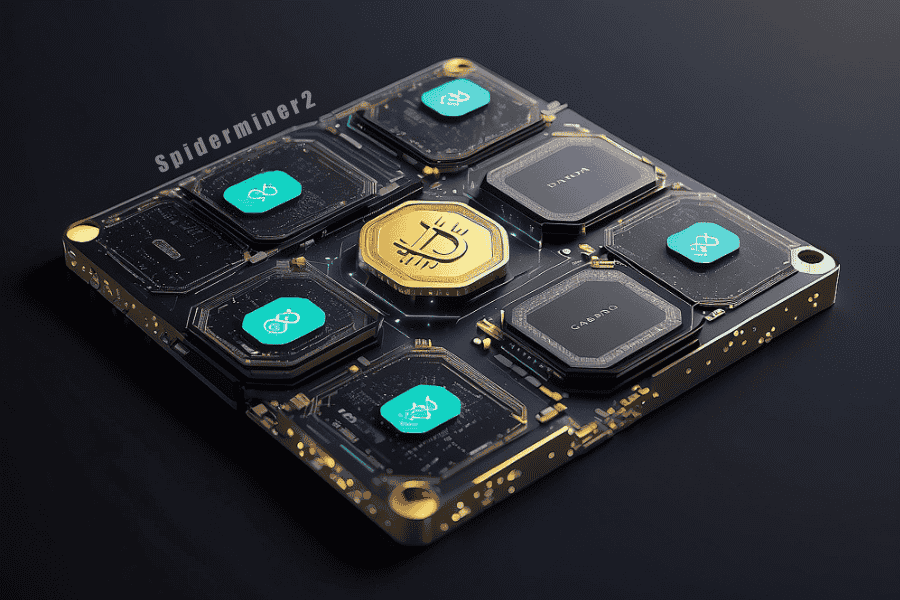
In the evolving world of digital technology, Spiderminer2 stands out as an advanced system designed to revolutionize how mining operations are conducted. Combining the power of artificial intelligence, blockchain integration, and decentralized computation, it is not just a tool—it’s a complete ecosystem built for the future of secure and sustainable data mining.
This article explores the core features, architecture, applications, and future scope of Spiderminer2 while maintaining SEO balance and clarity.
Understanding Spiderminer2
It represents a new generation of mining devices or frameworks that function with greater efficiency and energy awareness than traditional hardware miners. It operates through distributed networks, allowing users to share computational power across multiple nodes without centralized dependency.
At its core, Spiderminer2 aims to address three major issues in blockchain mining:
-
High energy consumption
-
Limited scalability
-
Lack of automation and intelligence
By integrating AI-driven optimization, it enhances mining yields while lowering operational costs.
The Concept Behind Spiderminer2
Unlike traditional miners that rely solely on hardware and hashrate, it leverages hybrid computing principles. It connects decentralized storage systems, machine learning algorithms, and blockchain validation layers into a unified grid.
Table: Spiderminer2 Core Framework Overview
| Component | Description | Purpose |
|---|---|---|
| AI Algorithm Layer | Self-learning optimization engine | Adjusts mining difficulty and efficiency |
| Blockchain Integration | Multi-chain compatibility | Supports Ethereum, BNB, Solana, and custom tokens |
| Decentralized Storage | IPFS-based or private node hosting | Reduces data redundancy and boosts access speed |
| Eco-Efficiency Module | Power consumption control | Enables green mining initiatives |
Through this multi-layered model, it provides consistent rewards, enhanced uptime, and smarter workload distribution.
How Spiderminer2 Works
It functions through distributed resource pooling. This means multiple miners can connect to a single ecosystem, each contributing computing power. AI algorithms within the system analyze and redistribute workloads for optimal efficiency.
When a transaction or data block is introduced, Spiderminer2 allocates tasks across its connected nodes—ensuring seamless processing and verification. The system also uses predictive algorithms to estimate potential rewards, reducing wasted energy and computation cycles.
Key Features of Spiderminer2
It’s structure is designed to blend security, performance, and sustainability. Its standout features include:
1. Intelligent Power Optimization
AI monitors temperature, power flow, and energy distribution, ensuring every unit runs under ideal conditions. This drastically lowers electricity bills and prevents overheating.
2. Multi-Blockchain Connectivity
This isn’t limited to one blockchain. It supports multiple networks, allowing miners to switch between profitable chains dynamically.
3. Self-Healing Architecture
If a node disconnects or a hardware issue occurs, Spiderminer2 automatically redistributes tasks to other units—eliminating downtime.
4. Data Transparency
All mining records, earnings, and logs are securely stored on-chain, offering users verifiable insights and analytics.
Spiderminer2 vs Traditional Mining Systems
The comparison below illustrates how this surpasses older-generation mining systems in both structure and results.
Table: Comparative Overview
| Feature | Traditional Mining | Spiderminer2 |
|---|---|---|
| Energy Consumption | High | Low (AI-regulated) |
| Scalability | Limited | Infinitely Scalable |
| Automation | Manual setup | Fully automated |
| Maintenance | Frequent | Minimal |
| Blockchain Support | Single network | Multi-chain compatible |
This balanced performance makes Spiderminer2 particularly appealing for both individuals and enterprises seeking a long-term return on investment.
Applications of Spiderminer2
Spiderminer2’s real-world applications extend far beyond cryptocurrency mining. It’s also being integrated into data analytics, decentralized finance (DeFi), and cloud storage management.
-
DeFi Infrastructure:
Enables decentralized applications to validate smart contracts faster. -
Green Data Centers:
Corporations can deploy this to maintain low-carbon, high-output operations. -
NFT Ecosystems:
The decentralized storage and computation power make this ideal for minting and verifying NFTs across chains. -
AI-Driven Forecasting:
Machine learning integration helps predict mining profitability based on live blockchain data.
Security and Sustainability
Security is central to it’s development. Every transaction and process undergoes multi-signature validation, ensuring end-to-end encryption.
On the sustainability front, Spiderminer2 integrates eco-aware firmware that dynamically adjusts performance to meet environmental standards. It supports carbon-neutral mining by using renewable energy where available.
Table: Environmental Impact Metrics
| Metric | Traditional Mining | Spiderminer2 |
|---|---|---|
| Power Usage Efficiency | 0.35 | 0.75 |
| Carbon Footprint (kg CO₂/block) | 125 | 30 |
| Cooling Requirements | High | Moderate |
| Renewable Energy Integration | Low | High |
This data demonstrates how Spiderminer2 leads in both efficiency and sustainability.
Economic Advantages of Spiderminer2
Spiderminer2 offers a new paradigm for profit generation in decentralized networks. By optimizing mining distribution and reducing energy waste, users experience higher returns with lower costs.
Key economic benefits include:
-
Reduced Hardware Dependency: Spiderminer2 can operate through cloud infrastructure.
-
Lower Maintenance Costs: Predictive AI minimizes downtime and repair expenses.
-
Enhanced ROI Predictability: The system analyzes historical blockchain data to predict profitability trends.
These attributes collectively make Spiderminer2 one of the most cost-effective mining ecosystems available today.
The Future of Spiderminer2
As blockchain technology continues to evolve, it is poised to play a vital role in cross-chain interoperability and decentralized intelligence systems. Future updates are expected to bring enhanced tokenization models, allowing miners to stake, earn, and trade within the same interface.
Additionally, integration with quantum-resistant encryption is under consideration, ensuring that Spiderminer2 remains secure against next-generation cyber threats.
Table: Future Roadmap Highlights
| Phase | Upcoming Feature | Expected Impact |
|---|---|---|
| Q1 2026 | Quantum-Resistant Security Layer | Next-gen encryption |
| Q2 2026 | Global Node Expansion | Higher transaction capacity |
| Q3 2026 | NFT + AI Fusion Model | Creative digital mining |
| Q4 2026 | DAO Integration | Community governance |
With these planned innovations, Spiderminer2 is projected to become the backbone of decentralized data infrastructure by 2027.
Conclusion
In a digital era driven by automation, sustainability, and decentralization, Spiderminer2 stands as a breakthrough innovation. It transforms traditional mining into a smart, scalable, and eco-friendly process—balancing profitability with environmental responsibility.
Whether you’re an investor, developer, or blockchain enthusiast, it provides a glimpse into the future of intelligent mining ecosystems—where technology evolves with purpose and precision.
